Information Retrieval Meeting

IQWiG's 3rd Information Retrieval Meeting in Cologne
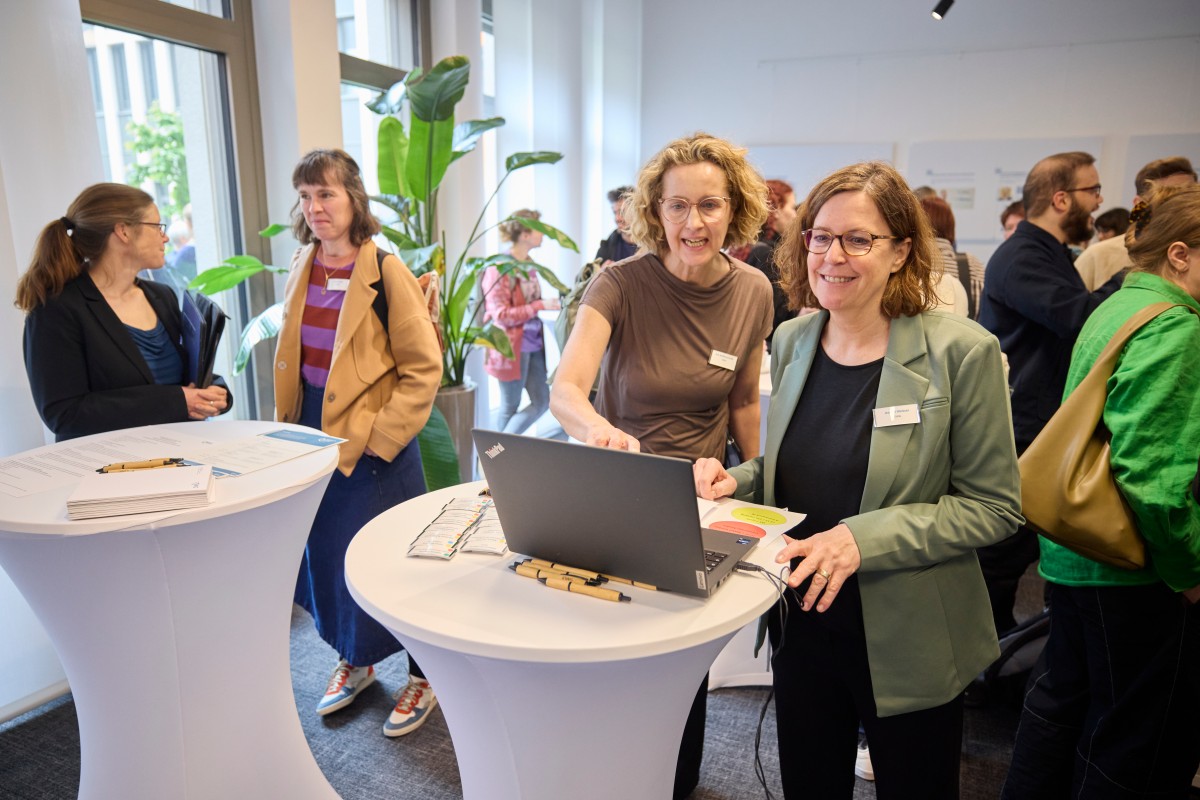
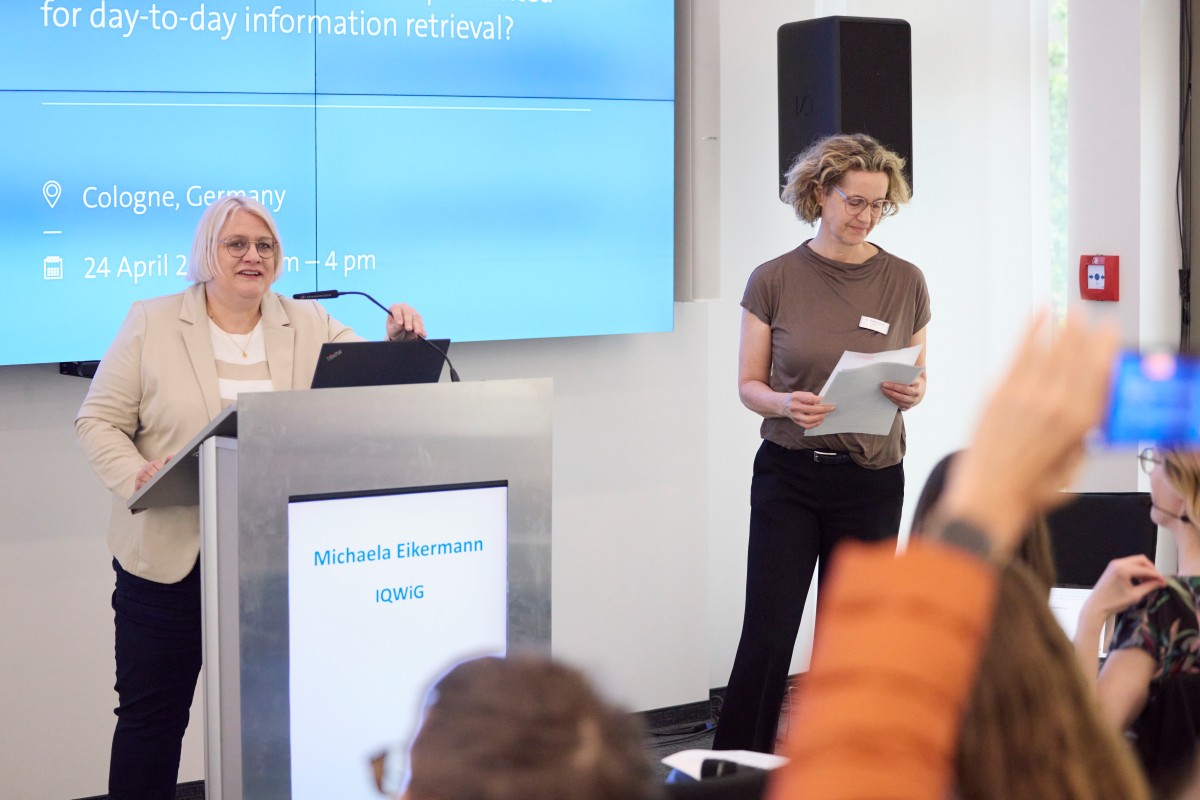
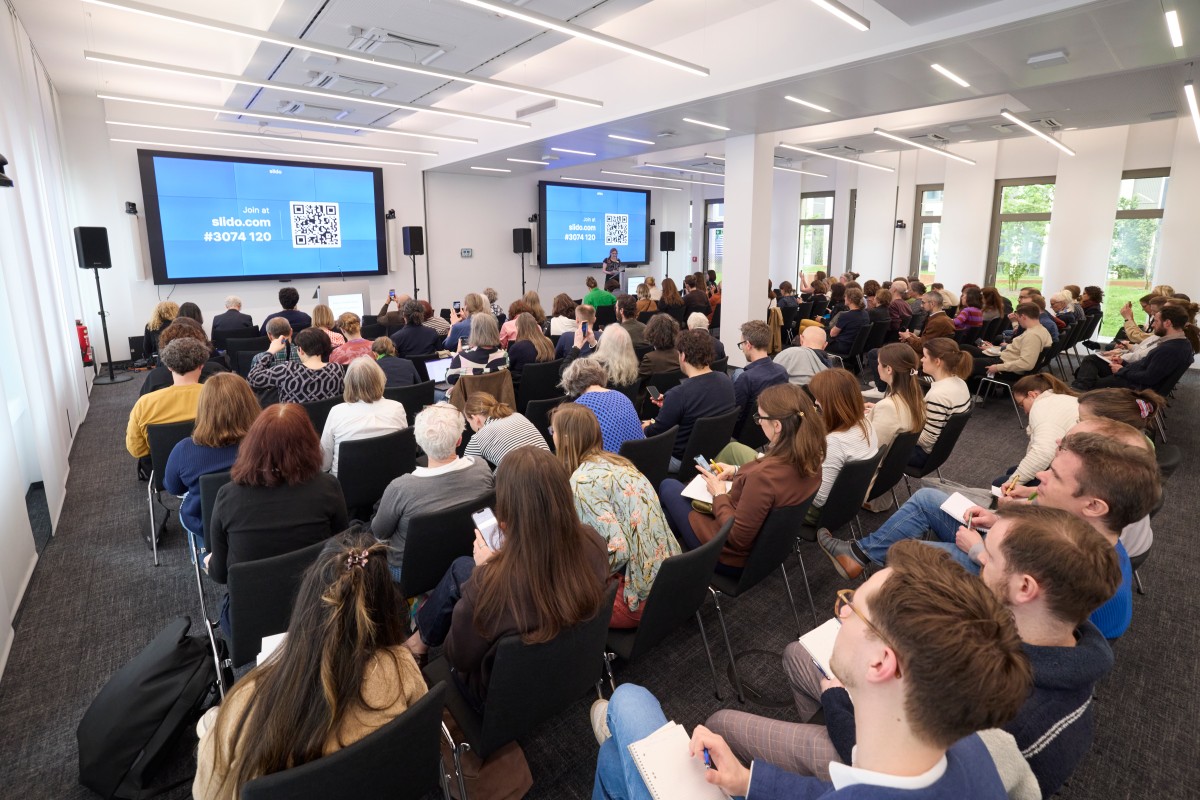
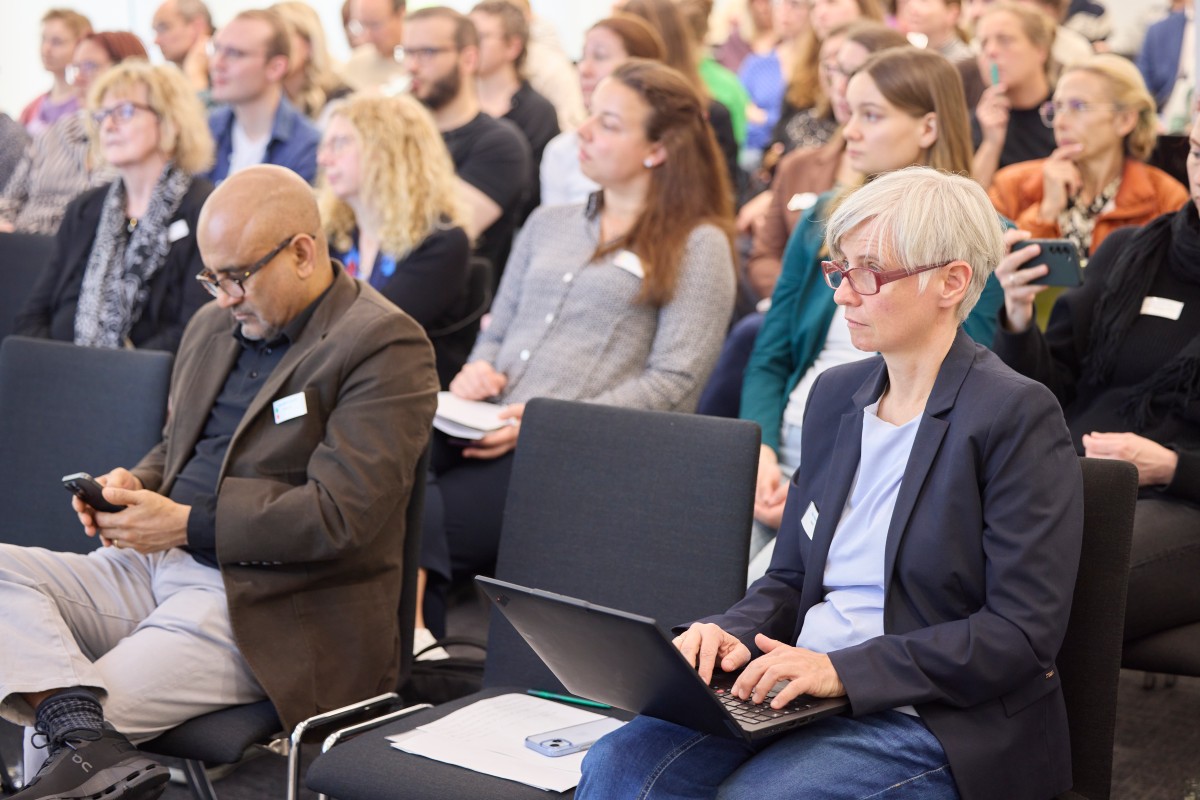
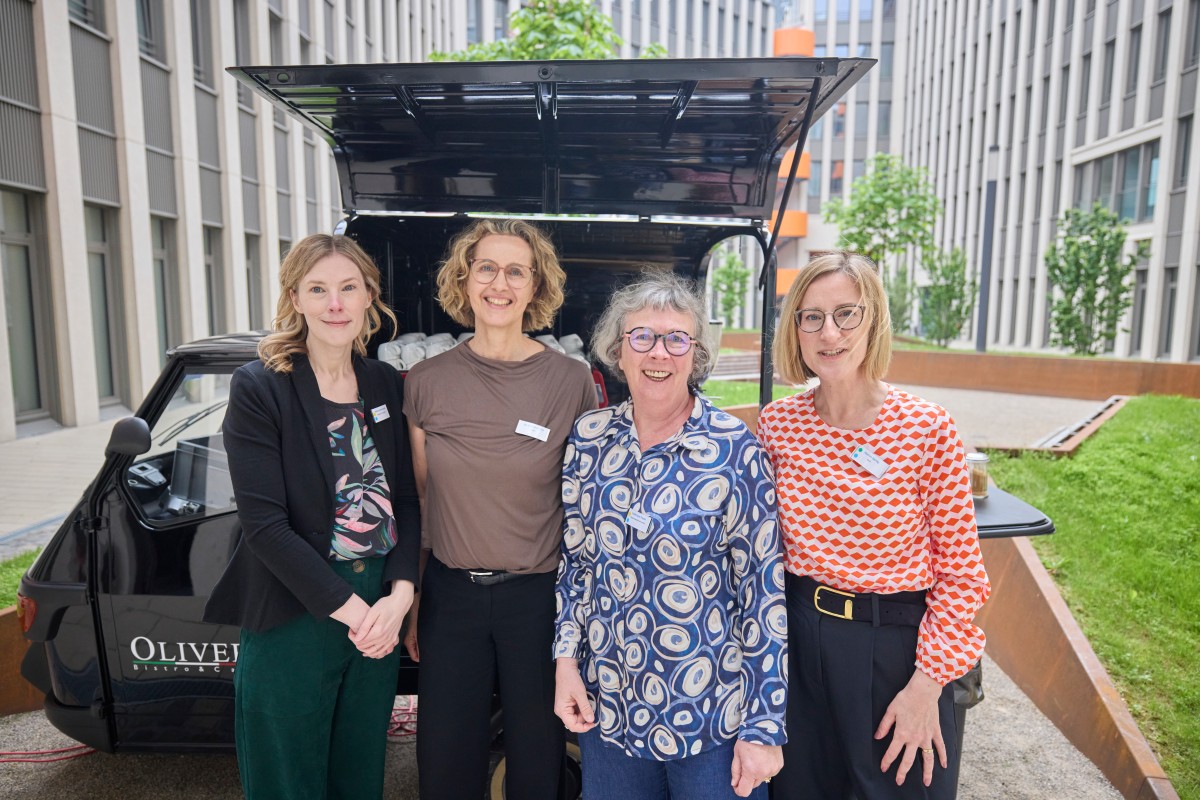
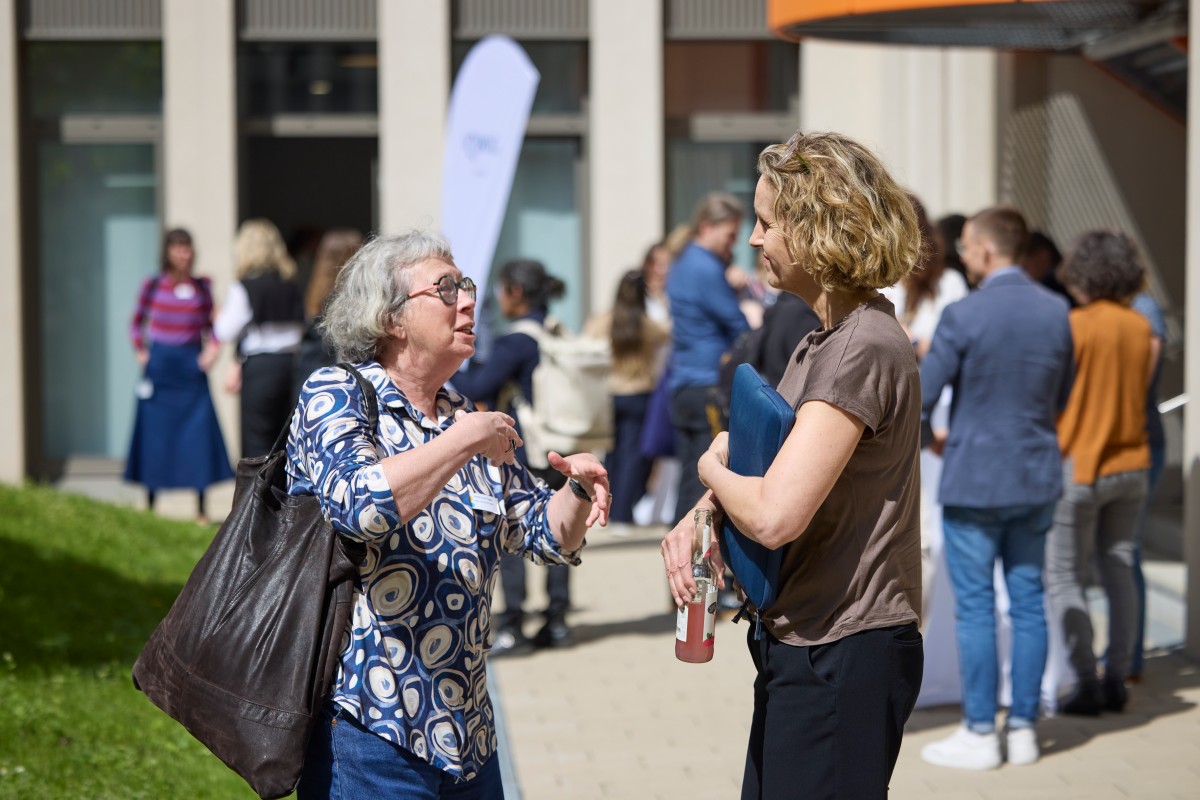
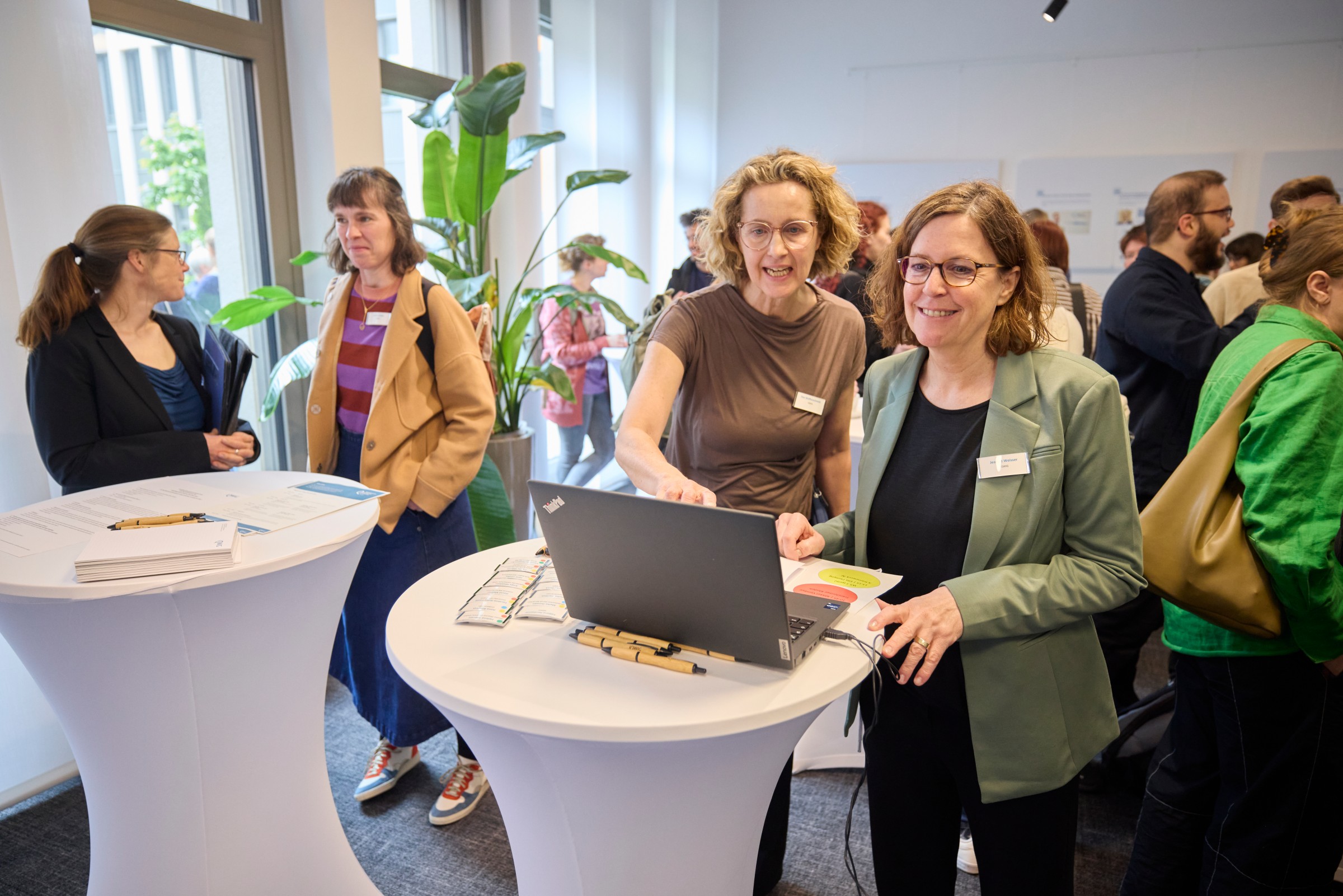
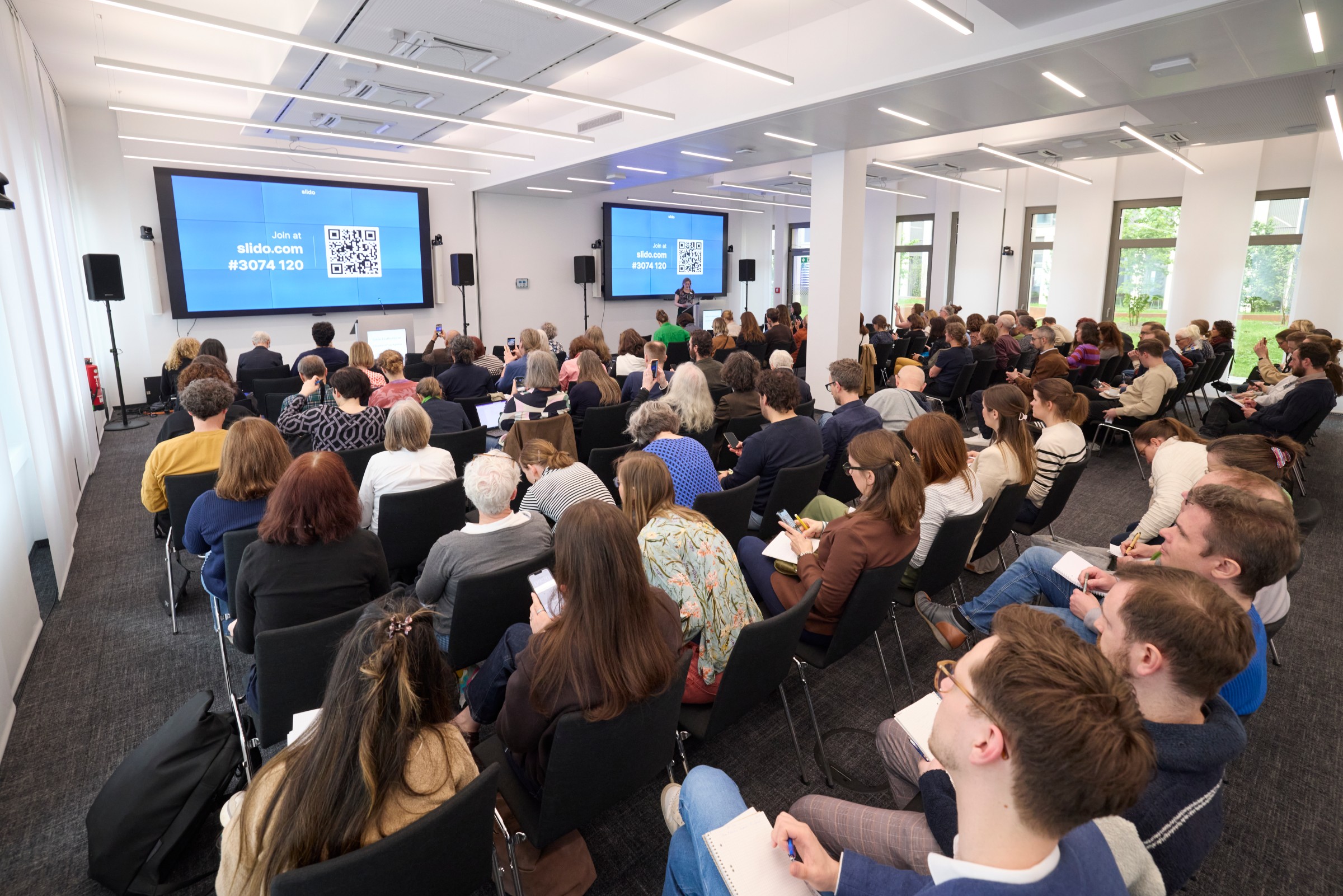
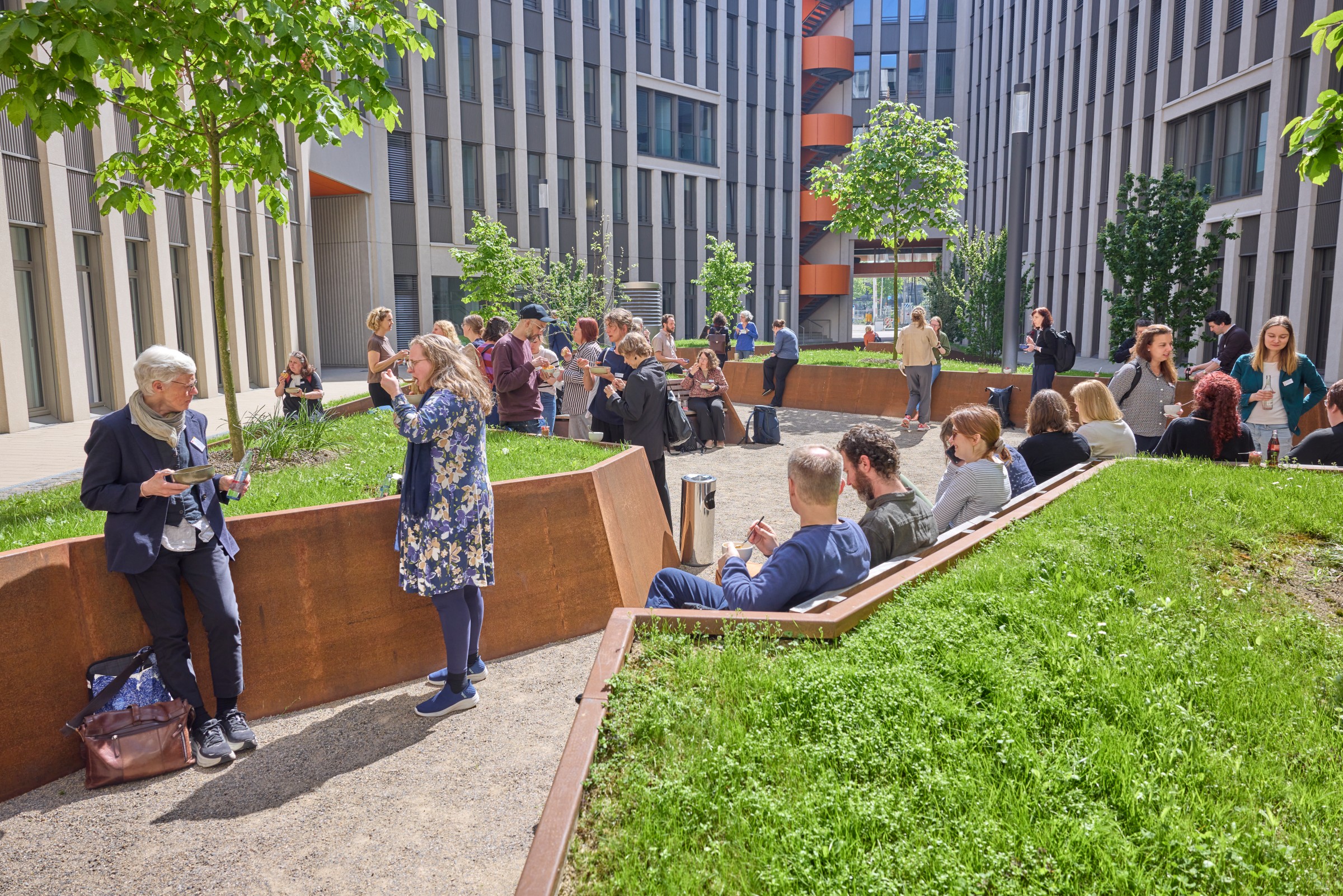
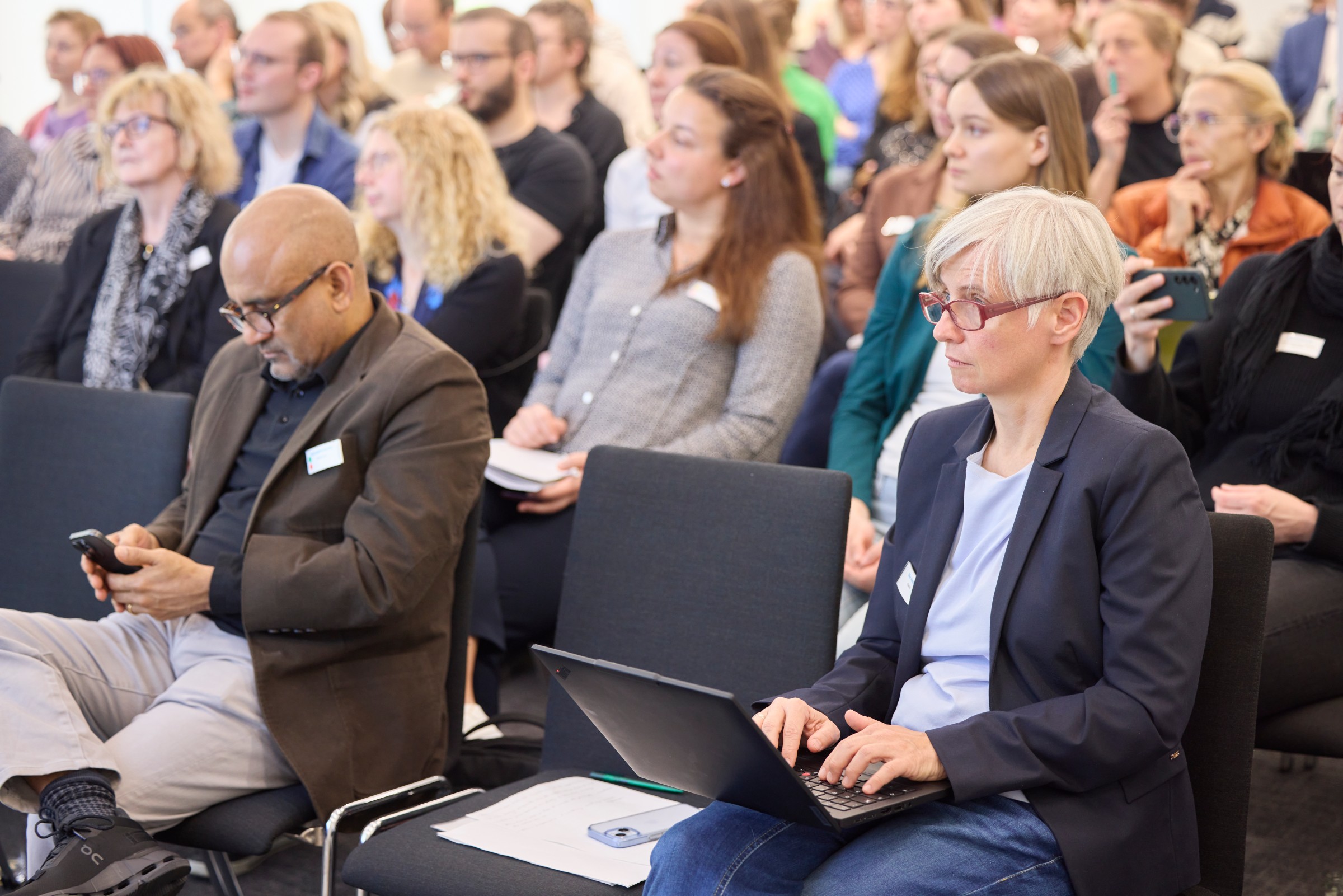
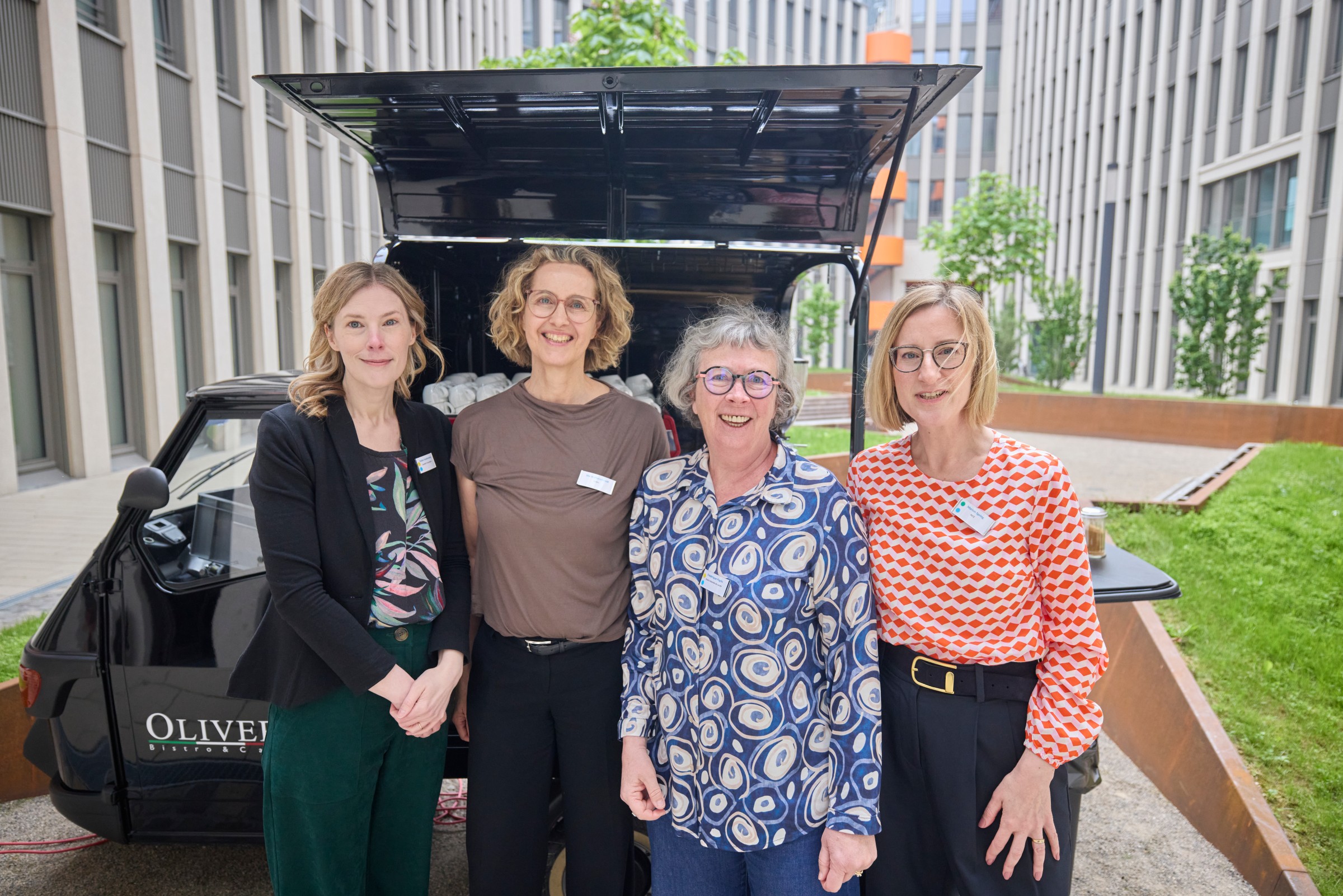
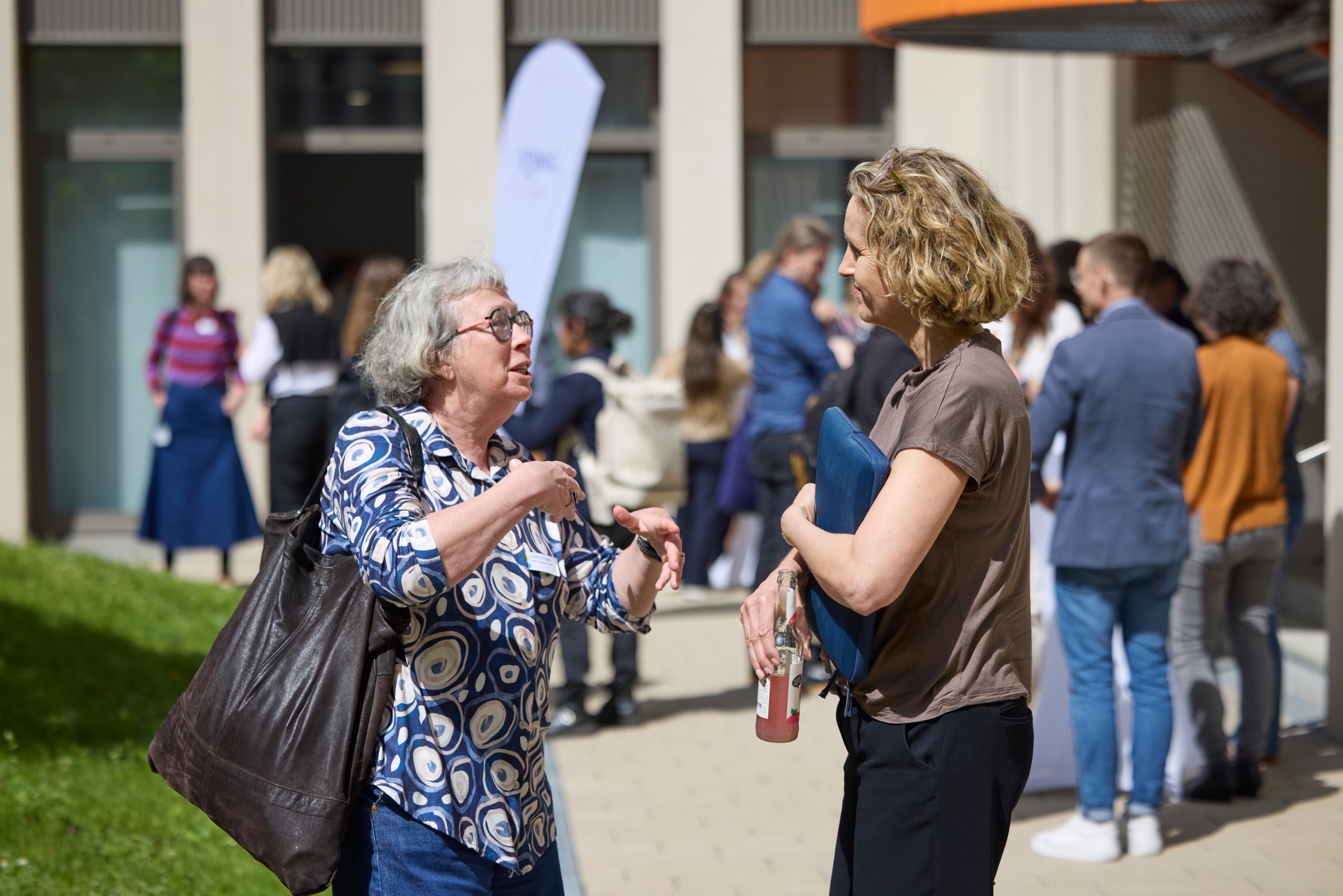
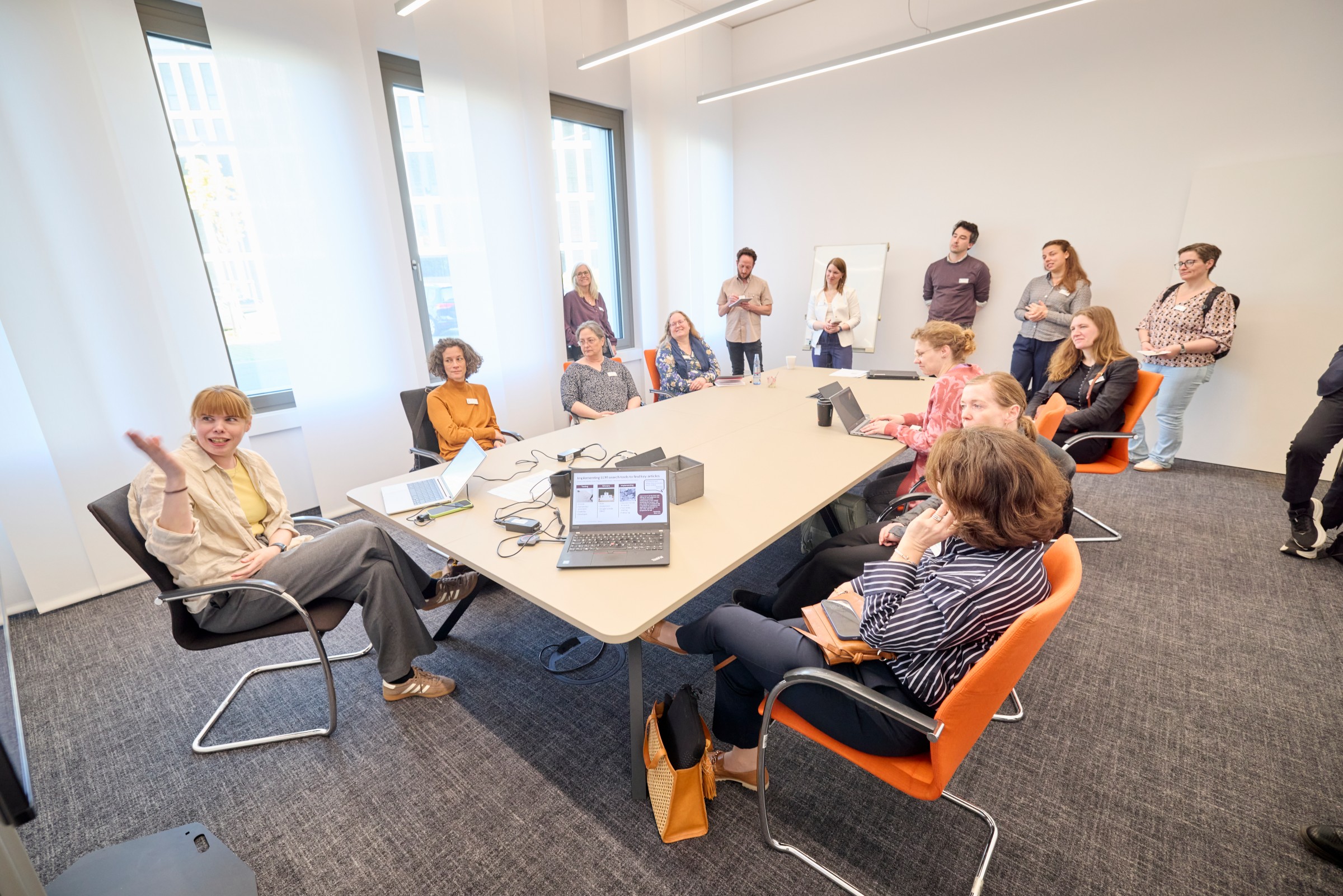
The IQWiG Information Retrieval Meeting (IRM) took place for the 3rd time on 24 April 2026 – and for the first time on its own premises. Around 120 information specialists from all over the world came to Cologne to discuss AI and the latest tools and developments.
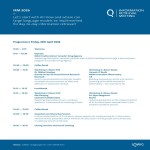
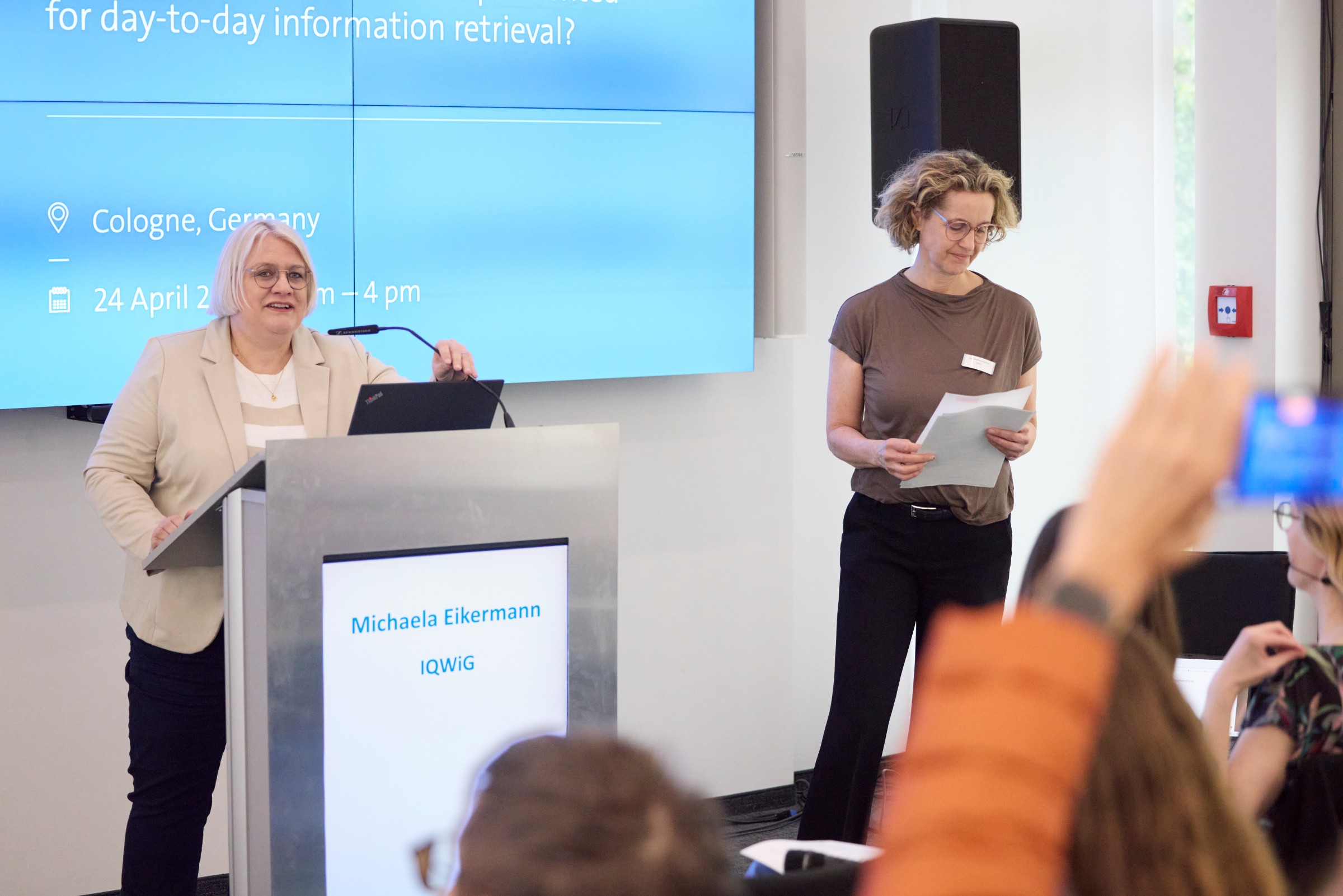
The title of the meeting: ‘Let’s start with AI! How and where can large language models be implemented for day-to-day information retrieval?’ Experts from 15 countries – primarily from health technology assessment (HTA) agencies and the academic sector – gave presentations and led workshops focusing on the areas in which they are currently testing AI or already using it in their day-to-day work.
Siw Waffenschmidt, Head of IQWiG’s Information Management Department, established right at the outset: “We information specialists are most affected by AI, as recent overviews show that almost 80% of studies in this field relate to information retrieval – that is, the search for and selection of studies.”

Robin Featherstone:
In her keynote speech, Robin Featherstone from Canada’s Drug Agency (CDA-AMC) spoke about their ‘test-and-learn’ programme for the use of AI. Particularly interesting was her report on the development of an own tool to assist in the search for ‘grey’ literature. So far, however, these tools seem to complement rather than replace conventional working methods.
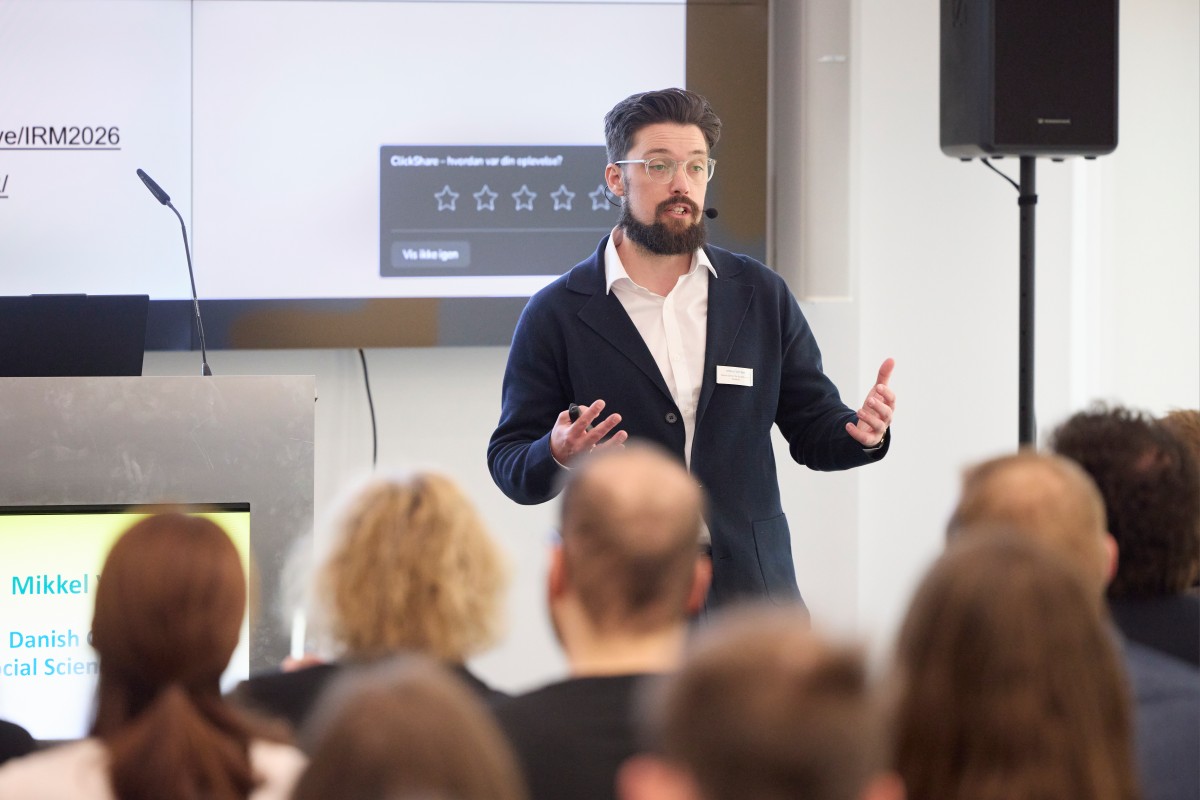
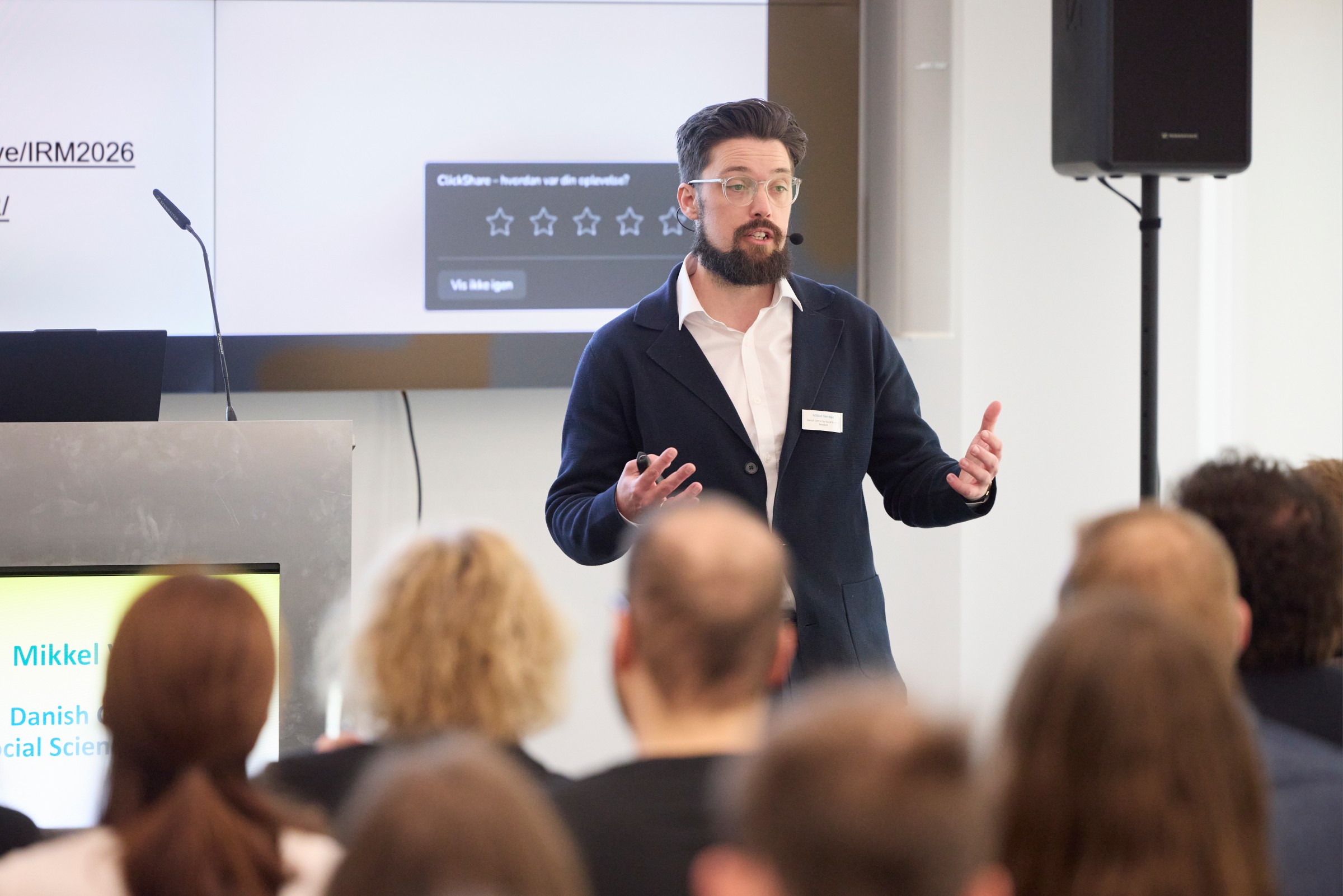
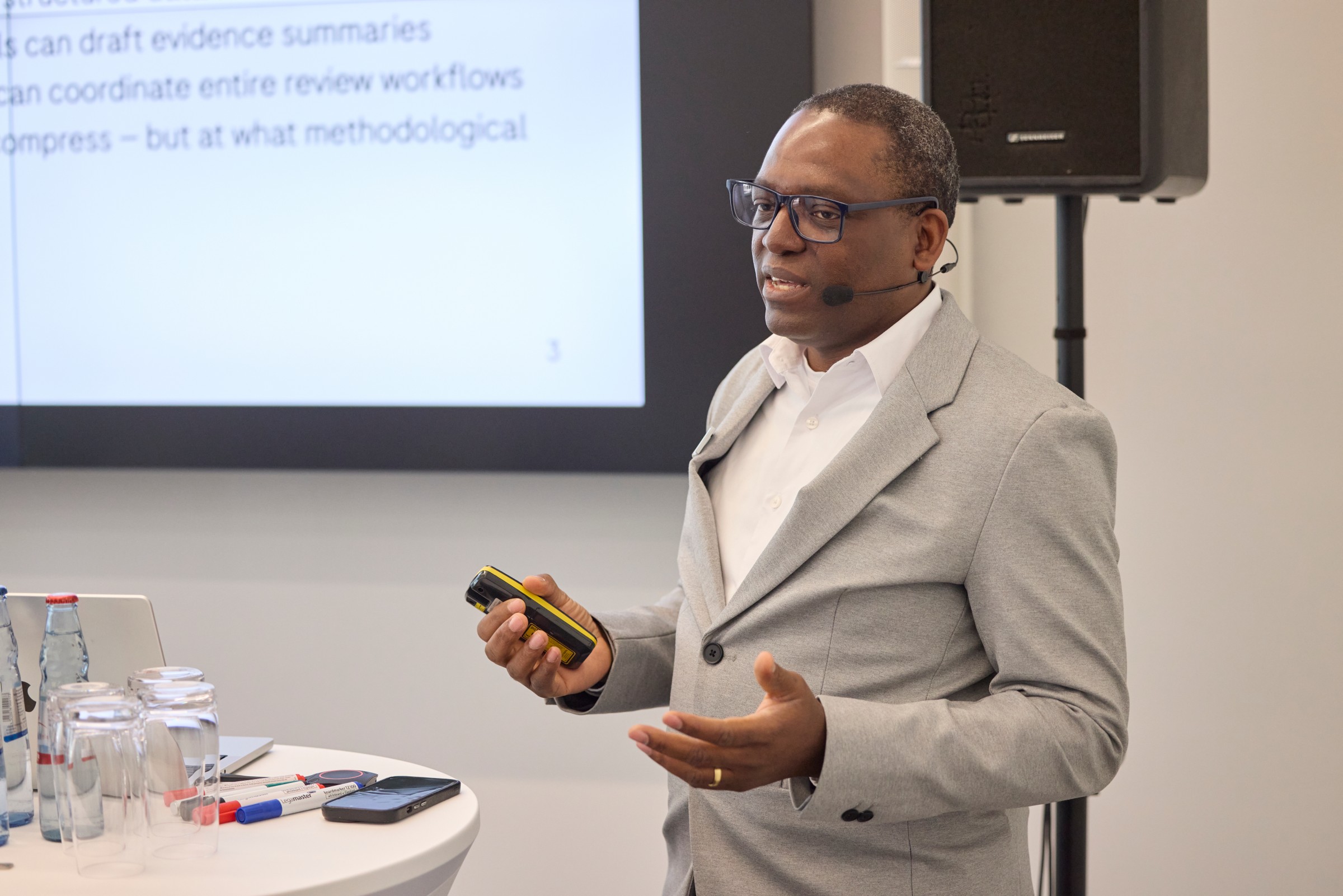
Mikkel Vembye:
In the subsequent series of workshops, Mikkel Vembye from the Danish Center for Social Science Research spoke on the topic of AI screening, focusing on the rapid changes taking place in the field: “The future is AI! Screening, as we know it today, will have largely disappeared within the next 10 years.”
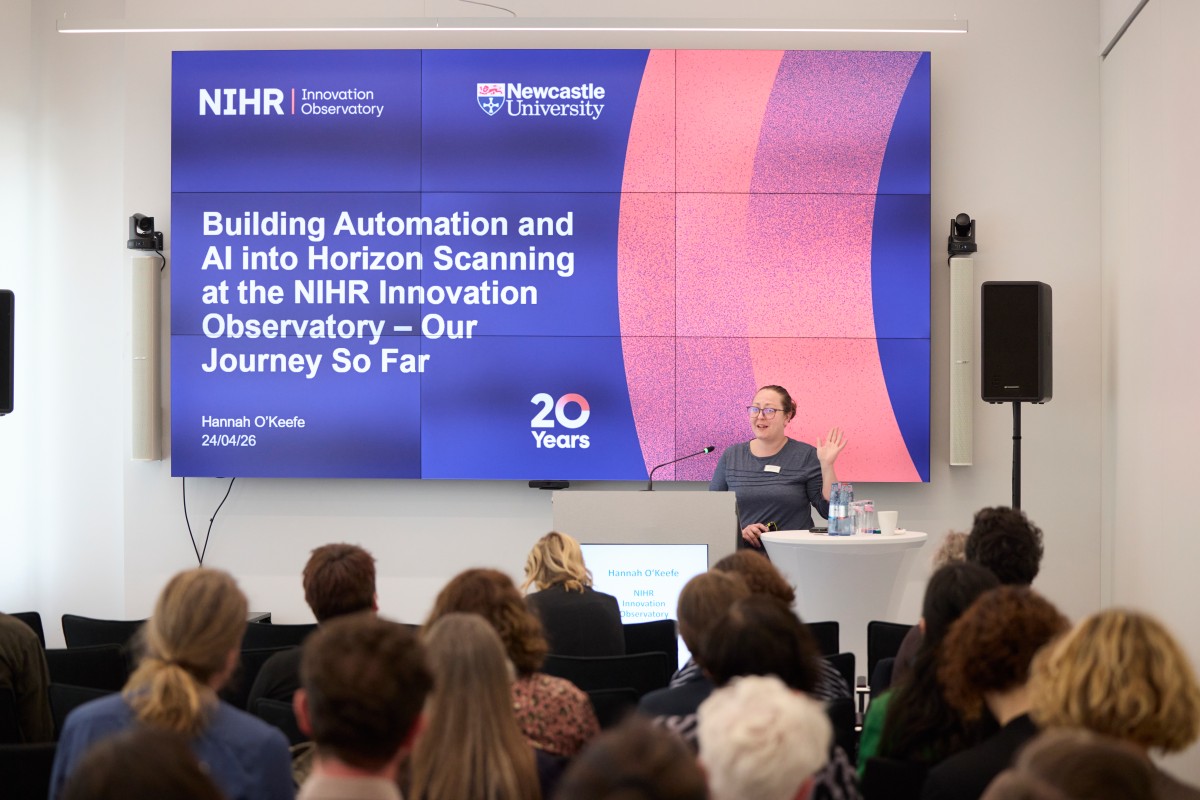
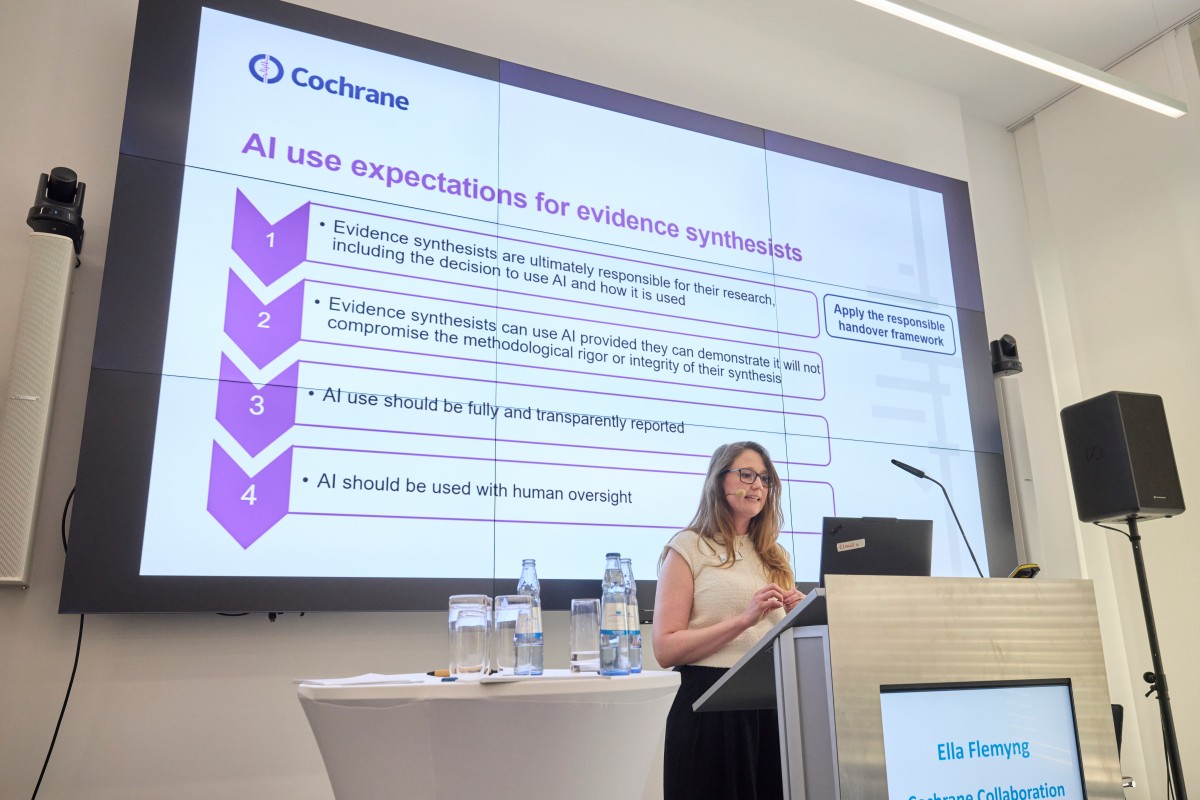
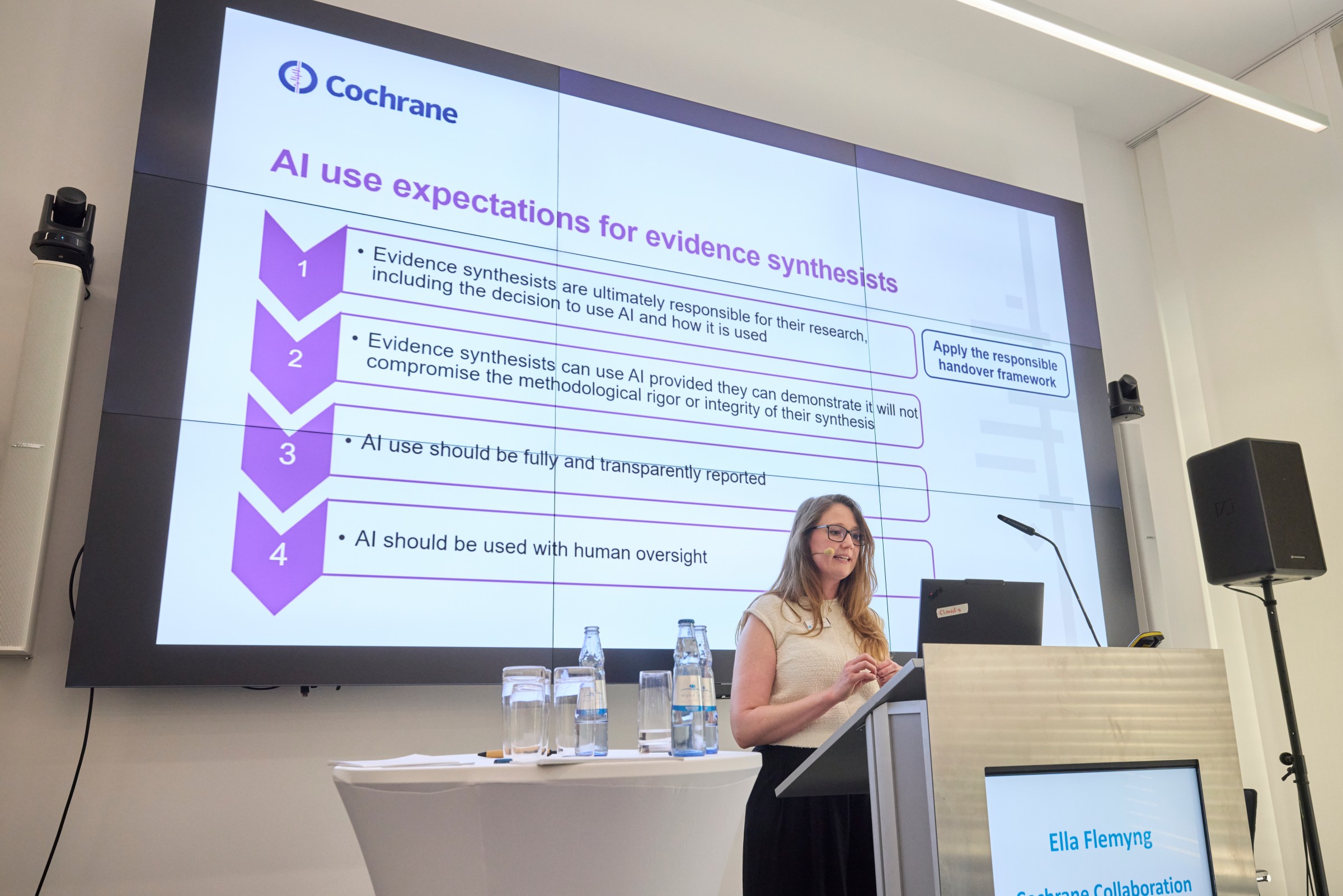
Ella Flemyng:
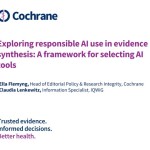
Ella Flemyng from the Cochrane Collaboration spoke alongside IQWiG’s Claudia Lenkewitz about the responsible use of AI in evidence synthesis and presented a framework for selecting suitable tools. It became clear that: “There is no shortcut, you have to validate and test the tools – and that can sometimes be just as time-consuming as conducting a systematic literature search without an AI tool.”
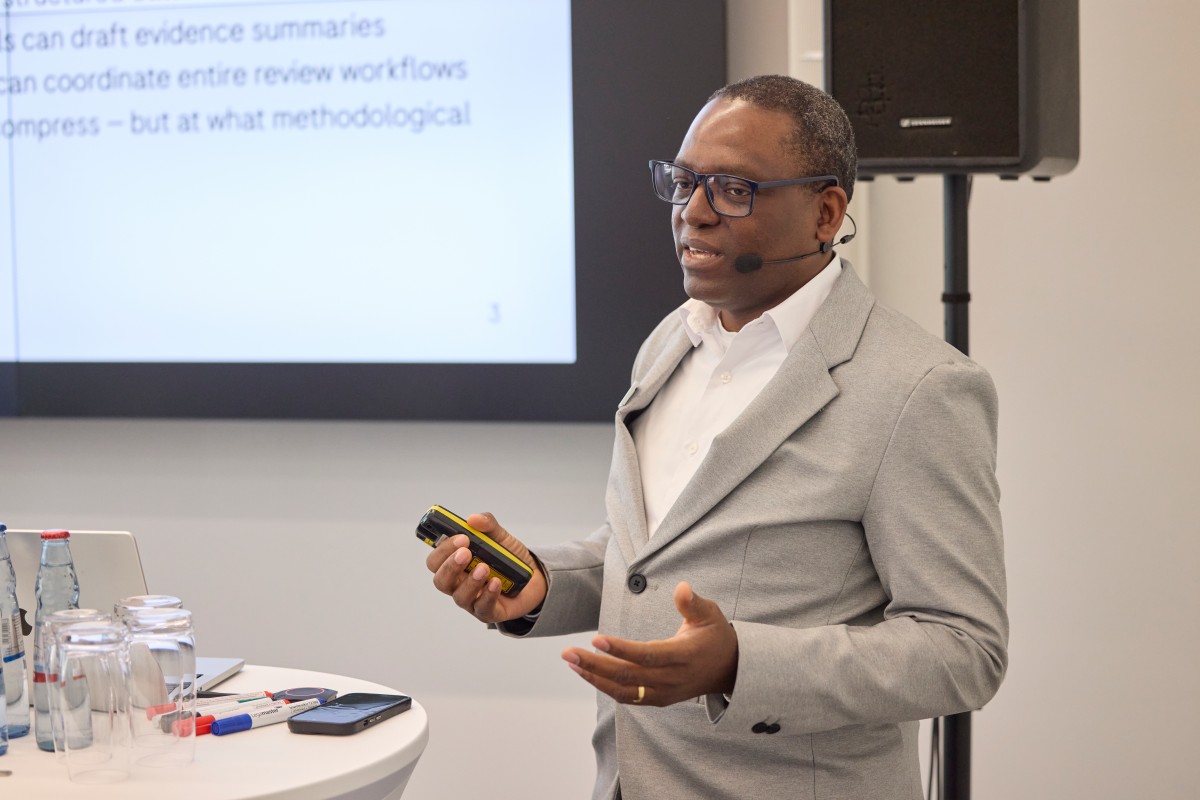
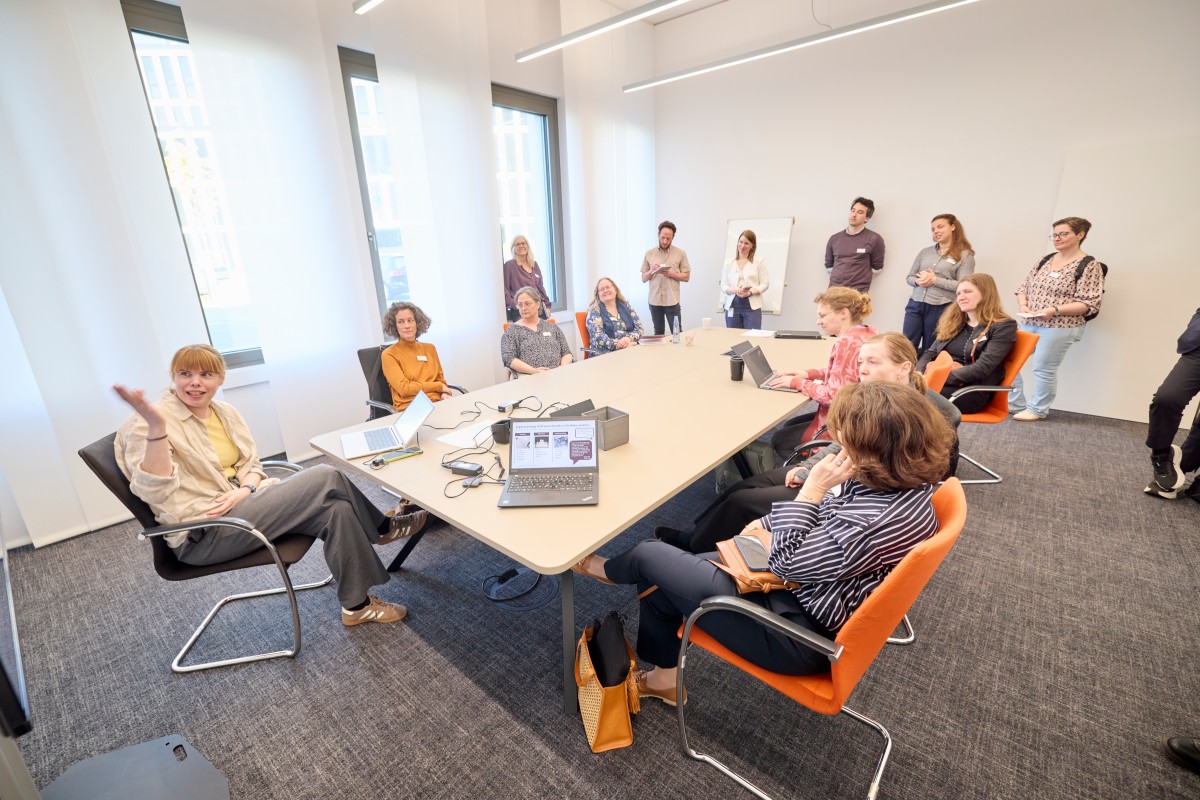
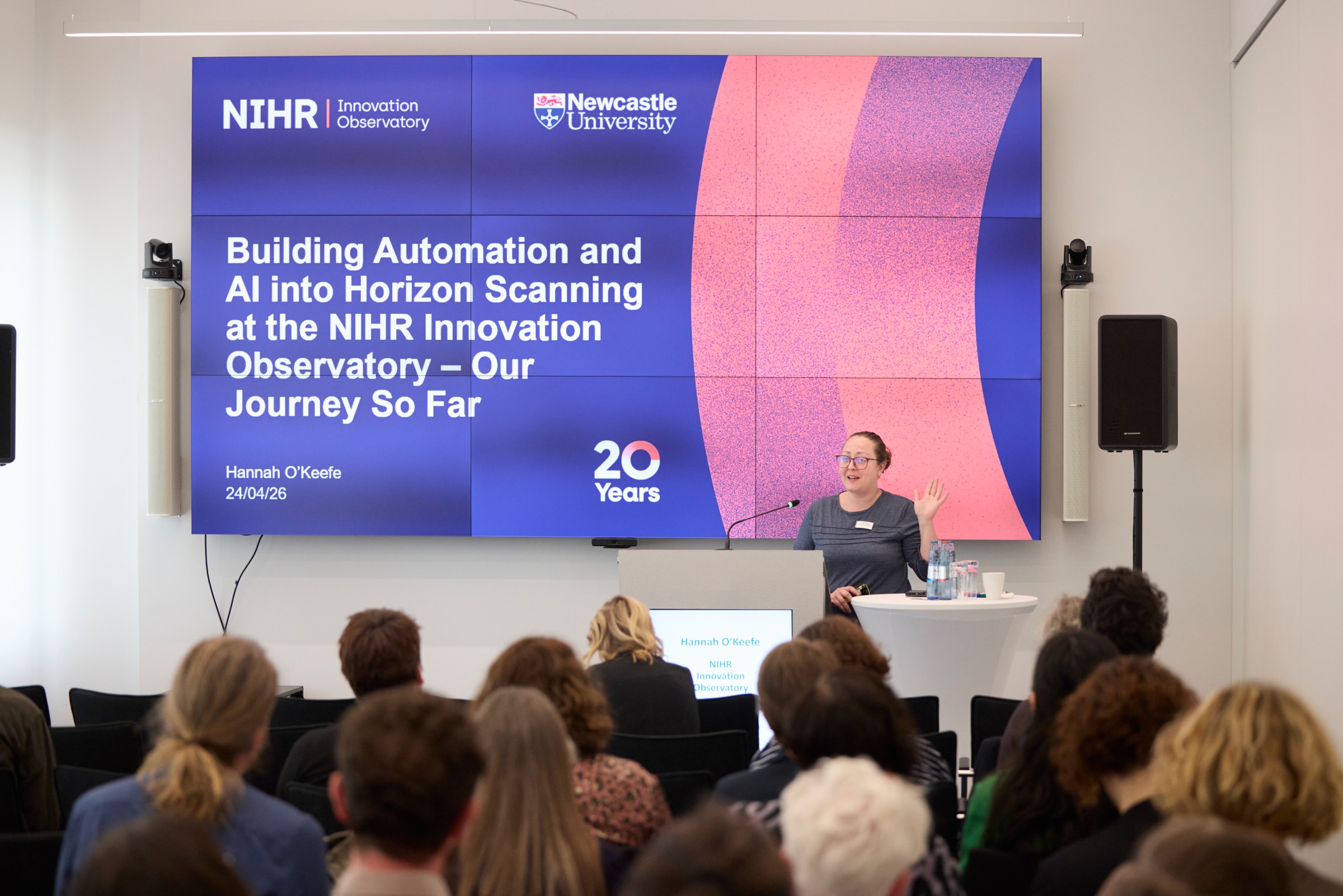
Short ‘snapshots’ rounded off the afternoon: in these interactive sessions, three- to five-minute presentations were held on various projects relating to the implementation of AI in information retrieval and then discussed in small groups.
At the end of the day, all participants were in agreement that it had been an important and valuable exchange, providing plenty of inspiring input for their own work – an all-round successful Information Retrieval Meeting.